Mark 3:7-35: A lake, a mountain, and a home

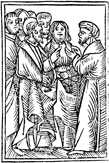
Jesus TeachesIn Mark 3:7-35, Jesus goes to a lake, a mountain, and an unidentified home. In all of these places, Jesus will be surrounded by people. At the lake crowds are pressing in so that Jesus must retreat to a boat before he is crushed. At the house, Mark tells us that the crowds were so thick and troublesome, Jesus and his disciples were unable to eat. In between, he takes a hike up a mountain.

After the Pharisees begin to plot with the Herodians over how they might end Jesus’ life, Mark has Jesus retreating with his disciples to  the lake, the Sea of Galilee. Jesus tries to withdraw, but the people draw near. Mark is keen to tell us that all kinds of people, from “Judea, Jerusalem, Idumea, and the regions across the Jordan and around Tyre and Sidon”, came to see Jesus. Everyone wants to see this man for themselves. I tend to think about Jesus being surrounded by a nice orderly crowd, but, based on Jesus’ request for a boat, it seems this crowd was anything but serene. Those with diseases are pressing to be near him and those with unclean spirits see Jesus, they fall down in front of him and identify him as the Son of God. Jesus tells them to be quiet.

Jesus then goes to a mountainside, and Mark tells us that Jesus calls to him those he wanted, which I think contrasts nicely with the crowds gathering to see him. Jesus then appoints twelve to be those who are sent out to accomplish two things: 1) preach and 2) to drive out demons on the authority and based on the commission from Jesus. The location of a mountain always brings to my mind the giving of the Law to Moses, who ascends, receives the message from God, and brings it back to the people. Jesus does something different here. He calls those he is empowering to the mountain, sending them out to be heralds of God as king and the kingdom of heaven as the dominant socio-political force in the world.

In the third act of this section, Jesus goes into an unidentified house. This time the commotion was so great that Jesus and his disciples weren’t even able to sit and enjoy a meal together. Two accusations are leveled at Jesus. The first comes from his family, “He is out of his mind!”. The second comes from the teachers who had come down from Jerusalem to protest, ““He is possessed by Beelzebul! By the prince of demons he is driving out demons.” Jesus will deal first with the teachers of the law and then his family.

To the teachers of the law, Jesus makes it clear that a divided kingdom will never stand. If Jesus is possessed, how is he able to drive out demons from those who are possessed with a demon. Why would Satan allow such a thing to happen? You can’t rob a strong man’s house without first tying him up and them taking what he has. The lesson here is that Jesus has bound Satan and is able to rob him of those whom he has possessed.

Jesus takes his rhetoric one step further. Instead of simply refuting the teachers of the law and moving on, he offers a harsh judgement against them and their particular brand of self-righteousness. If the religious leaders are the ones saying Jesus has an impure spirit, they are failing to recognize the work of the Holy Spirit. This is the ‘eternal sin’ Jesus mentions.  There’s endless speculation over this, but I think it’s the failure to recognize the work of God’s spirit – attributing the work of God to the work of Satan.

In verse 31, Jesus’ mother and brothers make an appearance so that he might deal with the accusation they brought against him, that he was out of his right mind. They ask to see Jesus by sending someone in to visit with him. I wonder why Jesus’ family didn’t go into see him themselves. Were there too many people? Did they not want to associate with the rowdy people who were clamoring to see Jesus? Were they afraid for their own safety? The spokesperson tells Jesus that his family is looking for him. I think this is an odd way of phrasing this because other people had been looking for Jesus and had obviously found him. Why wouldn’t his family enter the house and look for him themselves? Jesus rhetorically asks, “Who are my mother and brothers?” He answers it by claiming that those who draw near to him and do the God’s will is his brother and mother.

People, crowds of people, bookend these three scenes. There’s a mix of swarming crowds gathering around Jesus and his disciples who are sent to the swarming crowds. In a culture that was heavily organized by societal hierarchies and peppered with the importance of family, Jesus does something radical here when he appeals to the crowds. He accepts them (he doesn’t even know them) and claims that those who do his will are his closest relatives (which means he gives a back seat to his closest relatives).

Roman emperors knew the power of the populous masses and sought to control them with a variety of tactics. The Roman writer Juvenal passes along the policy of Emperor Augustus whereby the Plebians would be appeased with ‘bread and circuses’. In other words, you’ve got to give the people what they want, food and entertainment, or they’ll revolt against you. The gladiator battles and hippodrome races where a major aspect to this policy. Jesus isn’t simply appeasing the crowds. He’s meeting their needs at a deeper, more intimate level. This isn’t appeasement. It’s fulfillment.

For Mark, King Jesus has fully assumed control of his kingdom. He has brought good news and peace (1:1), had a royal servant prepare his path (1:2-4), received divine recognition as a Son of God (1:11), communicated his platform (1:15), gathered his inner council (1:16-20), battled against the warring powers (1:23-26), initiated his welfare policy (1:32-34), debated other religious-political leaders (Mark 2), trained his inner council to act on his behalf (3:13-19), received adulation from crowds (3:7-12), and settled the question about the inheritance of his crown (3:34-35).
 

Mark 2:23-3:6: Kingdom Disputes

00001516In the same way that Mark 2:13-22 includes two questions, the first one asked about Jesus and the second one asked about Jesus’ disciples, this section, Mark 2:19-3:6, includes two questions. The first is directed towards Jesus about his disciples, and the second where Jesus asks a question no one is willing to answer.

In the first Sabbath scene, Jesus is asked about a practice in which his disciples are engaging: picking heads of grain from the fields. This practice of gleaning can be found in three passages from the Old Testament, Leviticus 19:9-10, Leviticus 23:22, and Deuteronomy 24:19-22. This practice is also described in the story of Ruth 2 as a kind of social welfare for Ruth and Naomi.

Of course, the Pharisees know these passages from Leviticus and they know about Ruth and Naomi. Their problem is not that the disciples are eating from the fields, but that they are eating from the fields on the Sabbath. So, when Jesus is asked about their practice, he doesn’t refer back to Leviticus, Deuteronomy, or Ruth, but he references a story from 1 Samuel 21 where David, on the run from Saul, stops and requests from the priest the consecrated bread for himself and his companions.

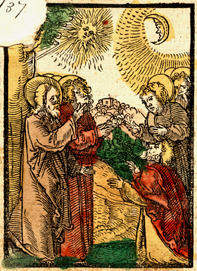
Perhaps what Jesus is implying here is that if David, while on his way to becoming king over Israel, makes an exception to the rule (Leviticus 22:10) when it comes to eating the consecrated bread, so to Jesus, who is a Son of David, the King of Kings, has the right to challenge restrictions on picking grain on the Sabbath. Perhaps the analogy is that in the same way David has some discretion in pursuit of his kingship, so too Jesus has discretion as he assumes his kingdom. After all, it is the king who makes and enforces the rules.  In essence, what he says to the Pharisees is that they believe David had the right to make an amendment to ceremonial regulations, so why wouldn’t the Son of God have those same rights.

Mark then deftly connects this story of the disciples picking grains with their hands on the sabbath to man before Jesus on the sabbath with a withered hand – unable to pick grain or do much other work to support himself. To have a deformity like this would mean not only that the man is unable to work, but probably couldn’t even engage in the social welfare described above that was intended to protect him.

It’s into this second sabbath story that Jesus asks his question: “Which is lawful on the Sabbath: to do good or to do evil, to save life or to kill?” We’ve seen several questions flying around in the gospel of Mark so far, even several questions from Jesus. This is the first time, though, that Mark tells us that everyone remained silent as a response to Jesus’ question. Mark portrays Jesus’ emotion, his anger and astonishment at their indifference. The question is answered by Jesus asking the man to stretch out his restored hand. From here the Pharisees partner with the Herodians, a reference to those who would count themselves as supporters of Herod Antipas, to plot how they might destroy this usurper to the throne.

I think what Mark is setting up for us in these passages is the battle between the kingship and Kingdom of God against the kingship and kingdom of the Pharisees and the Herodians. Jesus, quite naturally, comes into conflict with the kingdoms of the Pharisees and the Herodians. Mark’s inclusion of Jesus’ reference to King David as he was assuming the throne should place into our minds notions of Jesus as King and assuming a very different kind of throne. For the reader, the differences between these kingdoms are beginning to come into focus.

Mark 2:18-22: Jesus is questioned about f(e)asting

It’s now Jesus’ turn to be asked a question. In 2:16 it’s the pharisees question Jesus’ disciples about why he’s eating with tax collectors and sinners. In 2:18 they, potentially generic people, ask Jesus why his disciples fail to fast. When compared with the previous questioning, it appears that Mark is having a bit of fun with us as the disciples are questioned about Jesus’ actions and Jesus is questioned about the disciples’ action. In fact, if you go back to the healing of the paralyzed man in 2:1-12, there are questions floating about, directed at no one in particular, that Jesus answers. So, there is a movement from 1) questions directed at no one, 2) a question directed at Jesus’ disciples, and then 3) a question directed at Jesus. Jesus tries to clear the air by pointing out that the guest of honor is in town and you wouldn’t hold a fast when you were supposed to have a feast. The time for fasting will come, but the time now is to feast. Jesus even answers their question with a question, “The wedding guests cannot fast while the bridge groom is with them, can they?”

The fasting that the disciples of John and the Pharisees are asking about is the kind of legalese fasting required by Jews, fasting twice a week on Mondays and Thursdays. Perhaps this fasting is an attempt to follow an extra-biblical command in order to bring about the new Kingdom of the Messiah. In other words, it was by fasting, by pulling away from sinners, that the Kingdom would be inaugurated. What Jesus declares with his emphasis on fasting is the very thing he decrees in Mark 1:14, “The time is fulfilled, and the kingdom of God has come near, repent, and believe in the good news.” The Kingdom does not come through fasting, but, it’s in the act of feasting with those at the margins that God’s Kingdom is celebrated.

Jesus then puts two comparisons in front of us, one about old and new cloth and one about old and new wineskins. His overall point in using these illustrations is that no one would ever think about putting something new on something old. You don’t put new cloth on old cloth to repair a tear because it would end up making the tear worse. You don’t put new wine into old wineskins because they’ll burst the wineskins, ruining the wine and the wineskins. What do we make of this?

I think staying with the original question posed to Jesus about his disciples is important for understanding Jesus’ use of these illustrations. Even in Matthew and Luke’s accounts of this encounter, while there are a few variants, the question posed to Jesus about fasting is attached to the reference of old and new. Perhaps these examples are an indication that, yes, God was doing something new and wondrous in their midst. That, yes, the inauguration of God’s Kingdom is filled with feasting in anticipation of the final feast we’ll share with the Messiah. Yet, there’s also an element about who’s fit to be entrusted with this Kingdom message. Jesus is stinging in his indictment that it’s not John’s disciples, or the Pharisees, because their religion has made them unfit t0 be vessels of God’s Kingdom. The old would have to be made new again.

Instead, it’s those untainted by religion, those unsullied from years of thinking they have it right, who are entrusted to be God’s heralds. It’s those who are still flexible enough to handle the new cloth and the new wine. If we take Jesus at his word, the Kingdom message would have been ruined, along with John’s disciples and the Pharisees, if they had been entrusted with his message. It becomes all too clear why Jesus chose those with no formal education and no background in temple life to be his closest disciples.

Jesus is questioning the old versus the new, the flexibility of those he’s calling to handle his Kingdom message, and taking on the impossibility of legalese religion to bring about God’s Kingdom. Jesus teaches us that rigidity and a position of exclusion from those God is reaching out to has no place in God’s Kingdom.

Mark 2:13-17: Jesus calls Levi and Eats with Sinners

Tax collectors in Jesus’ day were those who had crossed over to work for the oppressive Roman empire. They were seen as unclean because their job required that they entire the homes of non-Jews in order to collect taxes, and their income was generated by over-taxing. So, to call Levi as a disciple was, in and of itself, a counter-cultural and incredibly subversive decision. This was someone, regardless of his piety or devotion, that others would not have accepted as working to inaugurate God’s kingdom. Yet, when called, Levi drops everything in order to pursue life with Jesus.

The presence of Levi among the disciples had to cause some internal grumbling. There’s reason to think that Levi might have been the person collecting taxes from James, John and Andrew. Even in the calling of disciples, Jesus is working on putting back together the fragmented society in which these men live.

After calling Levi, Jesus goes and eats dinner at his house, socializing and putting himself on equal terms with “sinners”. Those in religious power, the teachers of the law and Pharisees, saw this happening, they asked Jesus’ disciples why Jesus ate and drank with sinners. It’s interesting that they religious elites didn’t ask the disciples why they ate with sinners. Possibly the Pharisees and teachers regarded Jesus’ disciples as part of the group of “sinners” with whom Jesus was dining.

Unable, or unwilling, to answer for themselves, Jesus speaks up and tells the leaders that he has come to be with those in need of grace, not those whose access to God is used to  create barriers to prevent others from accessing it.

How do churches or Christian organizations respond to this text? Aren’t they the ones who are ‘righteous’? How do I respond to this text as someone from the perspective of the pharisees and teachers of the law than the “sinners”?

Any ministry taken up by the church must keep in mind that is mission, as given by Jesus, is to reach those on the margins. Jesus made those who were part of the religious establishment uncomfortable by calling those on the outside to be his disciples. Jesus’ ministry was directed to those on the outside, and those on the inside grasp and complain because their position of power has been ignored.

What’s most surprising and subversive about this text is that Jesus puts himself on the same social platform as those the pharisees decry as “sinners”, and suggests that his ministry that the Kingdom of God has come near is about calling those you wouldn’t expect to champions of his Kingdom message.

Mark 2:1-12: Jesus Heals a Paralytic and Forgives Sin


healing of a paralytic

Mark opens this scene with a crowd breaking down the doors to get a view of Jesus. Jesus is at home, preaching to the crowds, and four men come along carrying a paralytic on a bed. Unable to draw close to Jesus because of the crowds, the four men come up with a humorously absurd plan. They’ll drag their paralyzed friend on top of a roof, cut a hole in the it and then lower the man down in front of Jesus in order to be healed.

Mark’s humor is not our humor. However, if we envision four men dragging a paralyzed man up the side of a building, it doesn’t take much imagination to speculate on the yelling, near falls, and commotion this would have caused. Then there’s Jesus giving a sermon in the midst of this commotion, even as the four men break through the roof and lower their friend down to be with Jesus. Mark tells us that Jesus saw in this activity their faith, and its from their posture of faith that Jesus heals. This healing occurs because of faith, not to produce it in others.

Jesus’ initial response to their actions is to forgive the man of his sins. This probably wasn’t what the men had in mind when they began executing their plan. However, this statement sparks the conflict that propels the narrative along. It is in response to this forgiveness that the scribes, the religious experts begin to scoff. “Who does Jesus think he is? Who has the ability to forgive sins except for God alone”

It’s clear that the religious elite are having trouble making sense of Jesus’ claim. Feeling out the room, Jesus tells the scribes that he’s going to do something to make it known that he has the power to forgive sins; he’s going to tell the man to stand up, take his mat and walk. Jesus then refers to himself as the Son of Man, a reference to the powerful character described in Daniel who is given power and authority over “all peoples, nations, and languages.”  Jesus mimics this language from Daniel, wanting to show his own authority over sin and disease. The man is healed, picks up his bed and goes on his way. Others see this and are amazed at what’s happened. 

While reading this healing, I can’t help but think about Jesus baptism in the first chapter of Mark and the similarities. Mark tells us that the heavens are ripped open and the spirit of God descends on Jesus like a dove and a voice comes from the heavens saying that Jesus is God’s son. The four men rip open the roof and lower a paralyzed man to Jesus. At the heart of both of these stories is a question of identity. Jesus hears God’s voice claiming him as the Son of God. In Mark 2, Jesus refers to himself with another messianic title, the Son of Man. These two stories are woven together with identity and titles of Jesus lordship, and caught up in all of this are the scribes.  

In a sense the scribes are just as paralyzed. When they hear Jesus make his statement about forgiving sin, they are paralyzed in their faith, unable to see that Jesus is the one to whom their scriptures point. The paralyzed man has a faith that is free and active, and the scribes have a faith that is a limp as the paralytics legs. It appears that Jesus’ activity is already sparking various reactions. Some will dramatically climb to a roof in hopes of lowering a paralyzed friend into Jesus’ presence. Others will scoff at Jesus’ claim to forgive sins, revealing the rigidity and frailness of their faith. We’re left with the story urging us to make our own sense out of it.


Mark 1:40-45: Jesus Makes a Leper Clean

Leviticus 13 goes into great detail outlining the various skin diseases and lesions which would make a person unclean. As with most of the purity codes in Leviticus, leprosy was a disorder that made a person an outcast physically, socially and religiously. When we say leprosy, we are typically referring to Hansen’s disease, which includes symptoms of open sores, disfigured extremities, loss of feeling and even paralysis.

In Jesus’ day, leprosy could refer to any number of skin disorders, even those that could appear and disappear in a few days. Whether or not the man suffered from Hansen’s disease, or a minor skin irritation as outlined in Leviticus 13, is not central to the interpretation of the passage. If the man was in full obedience of Leviticus purity laws, he would have been confined to living outside of the community and tasked with avoiding all physical contact (Lev. 13:45). What’s interesting about the leper in Mark is that he appears to be defying these restrictions and boldly petitions Jesus to be healed. However, Leviticus clearly instructs those suffering with leprosy to visit the priest in order to be properly declared clean or unclean. Perhaps the leper views Jesus as serving in the role of a priest, but with the ability to not simply declare him clean but make him clean (v. 40).

Upon hearing the request of the leper, Mark gives us insight to Jesus’ thoughts concerning the scene. Jesus is described as “filled with compassion”. Some variations of the text might be translated, “filled with anger”. This alternate reading is important to consider because it gives Jesus a sense of righteous indignation at the demeaning aspects of leprosy. Compassion and anger seem to be working together as Jesus is concerned for the man’s physical well-being and angry at the rejection he has experienced in the community.

Jesus acts in a surprising way. His righteousness causes him to draw near those in suffering and pain, while the righteousness of others encourages them to push away those who are “unclean”.  In the process of healing the man, Jesus makes himself ritually unclean, but then he goes to the trouble of telling the healed leper to go to the temple to offer sacrifices as commanded by Moses (Leviticus 13). Jesus seems to have no concern for showing others that he is willing to go through the same process in order to be declared clean. In this passage, Jesus doesn’t simply relate or befriend those on the fringes of society. He becomes one of them, while also restoring the person to their rightful place in the community.

Mark concludes the account with details on the response of the cleansed leper. Instead of going to the priest and keeping his mouth shut, he begins to freely explain Jesus’ actions. Mark uses this to create tension in our minds about whether the man is being religiously rebellious or overflowing with joy, much like the tension created with Jesus’ compassion and anger. The final outcome is that news about Jesus spreads so quickly that he’s unable to stay in towns. Jesus is forced dwell in lonely places.

This last piece of information is not provided to simply further the narrative, nor is it to be considered as a throw away or transitional phrase. Instead, it’s part of the masterful storyteller at work. Jesus takes a leper, who was on the outside of society in “lonely places,” restores him to his community and, as a result, takes on the experience of the leper. Jesus is now no longer able to enter a town openly.

Mark’s tightly woven narrative creates tension, while also speaking to the nature of God, answering questions about Jesus’ identity. We are put in the position of deciding what this means. What kind of a tale are we being invited to join?